TL;DR: Pack familiar foods each child can eat safely, in easy-to-open portions, with drinking water and a little variety. Match the food’s shape and texture to the child, plan seated and supervised breaks, and carry extra no-cook food for delays. Keep perishables cold, retain ingredient information, and pack out every wrapper and scrap. A snack marketed for children is not automatically right for yours.
Table of contents
- Plan around your family and the route
- Choose familiar foods and useful variety
- Match food texture to the child
- Read the label before dividing the pack
- Build an allergy-aware packing routine
- Keep cold foods cold and hands clean
- Pack water and make a break plan
- Try the packing worksheet
- Adapt the plan to three outings
- Pack out food and reset for next time
- Frequently asked questions
Plan around your family and the route
Start with the outing, not the snack aisle. A neighborhood nature walk with an easy exit needs a different plan from a remote loop where a tired child, a weather change or a detour could extend the day. Note the likely walking time and the time spent traveling, stopping, playing and returning to the car. Choose a route the slowest person can enjoy, identify a turnaround point and check the forecast and destination alerts.
Think through each child’s usual eating routine, appetite, age, chewing ability, allergies and other dietary needs. A child who dislikes the texture of a bar at home is unlikely to welcome it simply because it has an outdoorsy wrapper. Let children who are old enough choose from a few foods you have already checked; an adult still handles the safety decisions. A familiar snack and a planned stop can make a break predictable without turning food into a reward for reaching a landmark.
For a hike, add extra food for the whole group in case of delays. The National Park Service’s Ten Essentials recommends an extra day’s supply, preferably no-cook food, as part of a broader emergency kit. That is not a prescribed snack count or a substitute for a route-specific plan. Include food each person can actually eat, rather than a shared reserve that excludes someone with an allergy. A packed snack does not replace navigation, layers, first aid or a plan left with someone at home; see NPS hiking safety.
Before leaving, ask: can an adult carry the food and water comfortably, reach the first snack without unpacking everything, and turn around if the outing stops working? If the answer is no, shorten the route or simplify the food plan. The day-hike packing guide covers the wider pack; this guide focuses on the family snack decisions within it.
Choose familiar foods and useful variety
Use foods already accepted at home as the foundation. Depending on the child, that might mean a familiar soft fruit prepared appropriately, a plain cracker, a sandwich, yogurt kept cold, or a packaged bar whose ingredients and texture you have checked. There is no requirement to buy an outdoor-specific snack. Choose a couple of different textures or flavors if your child likes variety, and think about an actual meal if the outing overlaps a usual mealtime. A collection of tiny treats may not be a practical lunch.
Consider the tradeoffs of the format. A whole, uncut fruit may travel well but need washing or preparation. A soft food may need a small container and spoon. A crunchy bar can break into crumbs; a fruit bar can be sticky or dense. A sandwich or yogurt may require a cooler. None of these observations makes one format universally better: they help you decide what can be handled and stored on this particular trip.
For a child who can manage the texture and whose dietary needs permit it, compare these actual label examples:
- That’s it. Apple + Strawberry Fruit Bars lists apples and strawberries and says the product does not require refrigeration. It is a fruit bar, not a complete meal or a guarantee of suitability for a young child. See the That’s it. directory listing, but check the exact package you buy.
- Nature Valley Oats ’n Honey Crunchy Granola Bars are sold in two-bar pouches, and the maker lists a two-bar serving for the linked product. Their crunch and crumbs may be inconvenient for some children. Honey is an ingredient; this is not a food for an infant under 12 months. The Nature Valley listing covers a broader range, so do not transfer one flavor’s details to another.
- Honey Stinger’s Gluten-Free Energy Waffles Variety Pack contains Salted Caramel and Cookies & Cream waffles. The maker labels those as gluten-free, but that does not establish suitability for another allergy or for a particular age. Honey Stinger says its products contain honey and identifies caffeine in some other products in its FAQ. Consult the actual waffle’s label and see the directory listing.
These are illustrations of different packages, not endorsements or a shopping list. Fruit bars, granola bars and other chewy or hard items can be choking hazards for infants and toddlers; choose something else for a child who cannot manage them. Explore the kid-friendly snack category as a format index, not an age or allergy certification.
Match food texture to the child
Age alone does not tell you whether a child can handle a food: development, chewing skills, texture and supervision matter. The CDC’s choking guidance for infants and toddlers lists whole or chopped nuts and seeds, spoonfuls or chunks of nut butter, meat sticks, granola bars, hard pieces of raw apple or carrot, whole grapes, dried fruit and chewy fruit snacks among potential hazards. Cutting a dense or sticky snack into pieces does not automatically make it safe.
For an infant who has begun solids, bring food and texture already used in their normal feeding routine. The CDC suggests smooth mashed or puréed foods at first, progressing with the child’s ability. A familiar mashed fruit in a clean container, for example, requires a spoon and attention to storage; it is not interchangeable with a chewy fruit bar. Ask the child’s clinician about appropriate choices if you are unsure. Do not offer honey to a child younger than 12 months, including honey-containing snacks; see the CDC’s infant food guidance.
Choose a safe place to stop. Have an infant or toddler sit upright, stay with them and watch while they eat; the CDC advises against eating while walking or riding in a stroller or car. Even an older child who normally eats independently benefits from a calm, seated break rather than eating while scrambling over rocks. Keep the pace relaxed and stop eating before moving on. Know how to summon help on your chosen route and consider learning age-appropriate first aid; an adult being present is not a guarantee against choking.
Read the label before dividing the pack
A wrapper can answer three different questions: what is in it, how much does the nutrition panel describe, and how must it be stored? Read the exact product and flavor before packing, including the ingredient list, allergen information, serving size, servings per container, best-by date and any directions for after opening. Check every purchase because recipes and packages change.
The FDA explains that a labeled serving reflects an amount typically eaten, not a recommendation for your child. For example, Nature Valley’s linked Oats ’n Honey product presents nutrition information for two bars. If you pack one, the listed per-serving amounts describe two bars, not the single bar you packed; for a simple estimate, use half the per-serving values, subject to label rounding. This is label arithmetic, not advice that one bar is the right amount for any child.
When comparing two foods, look at the amount you actually expect to pack instead of comparing a whole pouch with one labeled serving of a larger bag. Note ingredients alongside the nutrition panel. Added sugars are included within total sugars on the FDA label; do not add the two lines together. The label-reading guide explains the comparison in more detail.
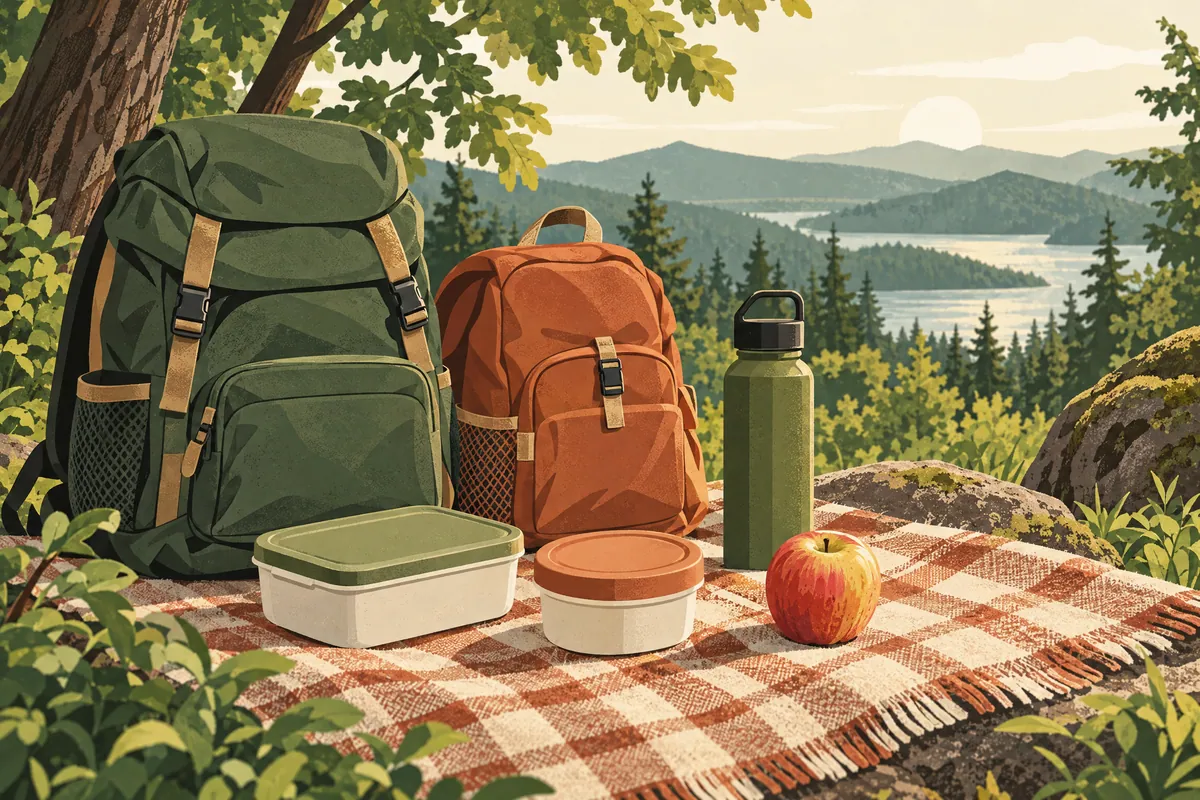
If you transfer food to a reusable box, preserve its identity. Write the brand, exact product and flavor on the container and keep the original wrapper or a legible photo of the ingredient, allergen and storage information. For multipacks, the outer box may carry details not shown on each wrapper. A label photo is a reference, not proof that a different box or future purchase has the same recipe. Bring only what you can identify, and keep foods with different restrictions in separate, clearly marked containers.
Build an allergy-aware packing routine
Ask families about allergies and dietary restrictions before a group outing, not after snack bags are opened. Agree on who provides each child’s food, whether sharing is allowed, and who carries the child’s prescribed emergency medication and action plan. Keep that medication accessible, not buried with reserve food. Follow the child’s existing care plan and discuss uncertainties with the family and their clinician; a directory filter cannot decide allergy safety.
Read the entire ingredient list and any “contains” or precautionary statement on the actual package. Under FDA food-allergen guidance, major allergens may be identified in the ingredient list or in a contains statement. Advisory statements such as “may contain” are voluntary: their absence does not prove a food is free of cross-contact. Allergies can also involve foods outside the major allergens. If information is unclear, contact the manufacturer and follow the family’s care guidance rather than guessing.
Prepare separate portions with clean hands, surfaces and utensils. Avoid a communal bowl, shared scoop or unplanned swaps; a child may reasonably believe a familiar-looking food is theirs. Soap and water are useful before and after eating. For allergen residue specifically, Food Allergy Research & Education notes that plain water and hand sanitizer are not effective substitutes for handwashing with soap and water. Plan for a practical washing setup or keep the foods separate in a way consistent with the family’s plan. The allergy-aware packing explainer offers more label questions.
Keep cold foods cold and hands clean
Sort the proposed snacks into two groups: foods that can travel unopened without refrigeration and foods that need temperature control. Shelf-stable options can simplify a longer hike, but read what happens after opening. An unopened package is not a promise that leftovers are safe in a warm pack overnight.
If you bring yogurt, a perishable sandwich filling or another refrigerated food, start it cold and carry it in an insulated bag or cooler with sufficient frozen cold sources. USDA lunch-packing guidance recommends at least two cold sources, placed above and below perishable items. Use a thermometer to check that the food remains at or below 40°F; an insulated bag by itself does not refrigerate food. Keep the bag closed and out of the sun as much as possible. If you cannot keep the food cold for the whole outing, choose an appropriate shelf-stable alternative instead.
USDA’s hiking and camping guidance describes the 40°F–140°F danger zone: discard perishable food left in that range for more than two hours, or more than one hour when the surrounding temperature is 90°F or above. The clock is cumulative, not a fresh allowance each time the cooler is opened. If time or temperature is uncertain, do not taste the food to decide whether it is safe. Carry spoiled food out and discard it appropriately.
Wash hands with soap and safe water before handling food. If soap and water are unavailable, USDA advises hand sanitizer containing at least 60% alcohol for general hygiene; CDC notes that sanitizer is less effective on visibly dirty or greasy hands and young children should be supervised when using it. This is separate from the allergen-removal issue above. Pack the cleanup supplies you can use at your destination, including a waste bag for used wipes.
Pack water and make a break plan
Give each person access to safe drinking water and a container they can use, or arrange for an adult to help. Pack enough for the route, weather, meals, cleaning and a possible delay, and verify whether any refill point will actually be open. The NPS water guide warns that clear-looking natural water can contain harmful organisms. If you plan to collect water, use treatment suitable for the local source and follow current park and equipment instructions. Check local advisories: ordinary backcountry treatment cannot make every contaminated source safe. For example, Zion National Park warns that recreational filtration or disinfection cannot remove cyanotoxins from its affected water.
For older children, plain safe water is a straightforward default to pack with familiar snacks. Drink powders are not water purification; they also vary in sugar, ingredients and sometimes caffeine. They are not automatically needed on a family walk. If a child has a medical condition or a clinician has given a specific plan, follow that advice. For infants, keep their usual breast milk or formula feeding plan rather than treating trail water as a replacement; the CDC distinguishes infant drink needs by age. Plan safe preparation and storage for the specific feeding method.
Choose a likely break spot before departure, then be willing to stop sooner. Look for a level place away from trail traffic and hazards, with room for everyone to sit together. Offer water and a familiar choice without pressuring a child to finish. A backup snack should remain reachable but separate from the first-break food, so an adult knows what is left if the return takes longer.
Try the packing worksheet
Fill one row per child or household member, including adults. The examples are prompts, not fixed portions. Replace them with foods and water arrangements that fit your family, the route and current package labels.
| Person or group | Familiar food and planned use | Handling or restriction to check | Where it goes |
|---|---|---|---|
| Child who needs a soft texture | Familiar mashed fruit for a seated break | Age and texture fit; clean spoon; safe storage | Closed container, with cold pack if needed |
| Older child | Familiar packaged snack for the first stop | Exact ingredients, allergens and ability to chew | Clearly marked, accessible pocket |
| Adult | Sandwich for a hike spanning lunch | Perishable filling kept at or below 40°F | Insulated cooler with cold sources |
| Everyone | Individual drinking containers and reserve food | Safe water, access, restrictions and delay plan | Bottles reachable; reserve in adult pack |
| Group with an allergy | Food supplied or agreed by the family | No unplanned sharing; action plan and medication accessible | Separate labeled containers; medication with responsible adult |
The worksheet exposes gaps that a simple count misses. If one row says “fruit” but no one has considered preparation, a knife, clean hands or cold storage, resolve that at home. If the only reserve contains an allergen someone avoids, add a suitable separate reserve. For a broader starting point, use the trip and dietary finder as a planning aid, then verify every actual product and family requirement yourself.
Adapt the plan to three outings
A short local loop with a toddler
The family expects to be close to the car and returns before a usual meal. Pack a familiar, developmentally appropriate snack in a secure container, safe water for the adults and age-appropriate drinks for the child, plus wipes or a handwashing setup and a small waste bag. Stop somewhere the toddler can sit upright with an adult watching. A reserve suited to the child is still useful if plans change. If the child is not ready to walk or the weather deteriorates, turn around rather than relying on snacks to stretch the outing.
A half-day hike with children of different ages
One child eats a familiar crunchy bar; a younger sibling cannot manage that texture. Pack separate, clearly identified foods, including a suitable alternative and reserve for each child. If lunch includes a perishable filling, use the cold setup above or change the lunch; do not assume the first snack stop will happen before the ice packs warm. Put water and the first-break foods where an adult can reach them. Include an easy, supervised stop before the children are overtired, while keeping the option to stop earlier.
An overnight campground trip with another family
Agree in advance on the meal plan, sharing boundaries, allergies and who is responsible for medication. Use a cooler only while it can hold refrigerated foods safely; plan shelf-stable foods for later if reliable cold storage is unavailable. Keep an age-appropriate no-cook breakfast or snack available in case cooking is delayed, and carry enough safe water for both drinking and any food preparation.
Check the campground’s current food-storage rules before arriving. An overnight food locker or required bear-resistant container must hold all relevant food and scented items, including children’s snacks, wrappers and trash—not just the dinner ingredients. The NPS bear-storage guide explains that rules differ by park. A sealed snack box can organize a pack, but it is not necessarily wildlife-resistant. Give children a role, such as placing their closed snack container in the designated locker with an adult.
Pack out food and reset for next time
Bring a resealable rubbish bag large enough for opened wrappers, sticky containers, uneaten food and crumbs. Keep it accessible during breaks, then put it with the food under the destination’s storage rules. Do not feed wildlife or leave even fruit peels and scraps behind: the NPS explains that food scraps can attract bears and that food and garbage must not be left unattended. Check the sitting area together before leaving; a child can help spot a dropped wrapper without being responsible for the whole cleanup.
At home, empty and wash containers and bottles. Discard perishable leftovers that were not kept safely cold, and follow package instructions for opened shelf-stable products. Ask a simple question: what was easy to open and eat, and what stayed in the bag? Adjust the next trip to the answer rather than treating an untouched snack as a failure. If a child’s needs or a product label change, update the plan instead of reusing the old worksheet unchanged.
Before-you-go checklist
- Route, weather, turnaround and likely meal or snack stops considered.
- Familiar food and a suitable no-cook reserve for each person, including adults.
- Food texture, seated supervision and feeding supplies matched to each child.
- Exact ingredient, allergen, serving and storage details checked and retained.
- Allergy plan and prescribed medication accessible; group sharing rules agreed.
- Safe water and age-appropriate drinks packed, with refill or treatment plan if needed.
- Perishables cold, with adequate frozen sources and a way to check temperature.
- Clean-hand supplies, containers, utensils and a rubbish bag packed.
- Destination wildlife and food-storage requirements checked.
Frequently asked questions
How many snacks should I pack per child?
There is no single number for every child or route. Plan around the time away, usual meals, appetite and breaks, and bring suitable extra food for delays. NPS recommends an extra day’s supply of no-cook food within its broader Ten Essentials.
Are trail mix and nut butter safe for toddlers?
Not automatically. The CDC lists whole or chopped nuts and seeds and chunks or spoonfuls of nut butter as choking hazards for young children. Choose a texture appropriate to the child and discuss uncertainty with their clinician; also account for allergies.
Can I give a honey-sweetened bar to a baby?
Do not give honey to a child younger than 12 months, including in a honey-containing snack. The CDC warns that honey can cause infant botulism. The bar’s texture and other ingredients need checking for older children too.
Do packaged snacks need to stay in their original wrappers?
Not necessarily. If you repack, label the exact food and retain the ingredient, allergen and storage information, such as the wrapper or a legible photo of the box. Keep different foods separate and reread the package each time you buy it.
Can I bring cheese or yogurt on a warm hike?
Yes, if you can keep the perishable food at or below 40°F throughout the outing. Use an insulated cooler with enough frozen cold sources and a thermometer. Otherwise choose an appropriate shelf-stable food, and follow USDA’s time and temperature guidance.
Are electrolyte powders necessary for children on a family walk?
Not automatically. Bring safe water and follow any individual advice from the child’s clinician. Mixes vary in ingredients and may contain caffeine or added sugar; they do not make untreated water safe. Infants have different feeding and drinking needs from older children.
Does a gluten-free or kid-friendly label mean a snack is allergy-safe?
No. Gluten-free does not address every allergen, and a kid-friendly category says nothing definitive about a child’s allergy or ability to chew. Check the exact ingredient and advisory statements, consult the family’s care plan, and contact the manufacturer if information is unclear.
What should we do with leftover crumbs and wrappers?
Collect them in a resealable waste bag and carry them out; do not leave food scraps for animals. At a campsite, store the rubbish along with food according to the destination’s current wildlife rules.
Sources & further reading
General information, not nutritional or medical advice. Check the current label and your own needs before choosing a product.